The Girls Who Glowed: How Five Dying Dial Painters Forced a Reckoning in Orange, New Jersey
Hired around 1917 to paint watch dials with luminous radium paint and taught to point their brushes with their lips, a group of young New Jersey women lost their jaws, their health and ultimately their lives, but their lawsuit forced a 1928 settlement and helped lay the groundwork for American occupational-disease law.
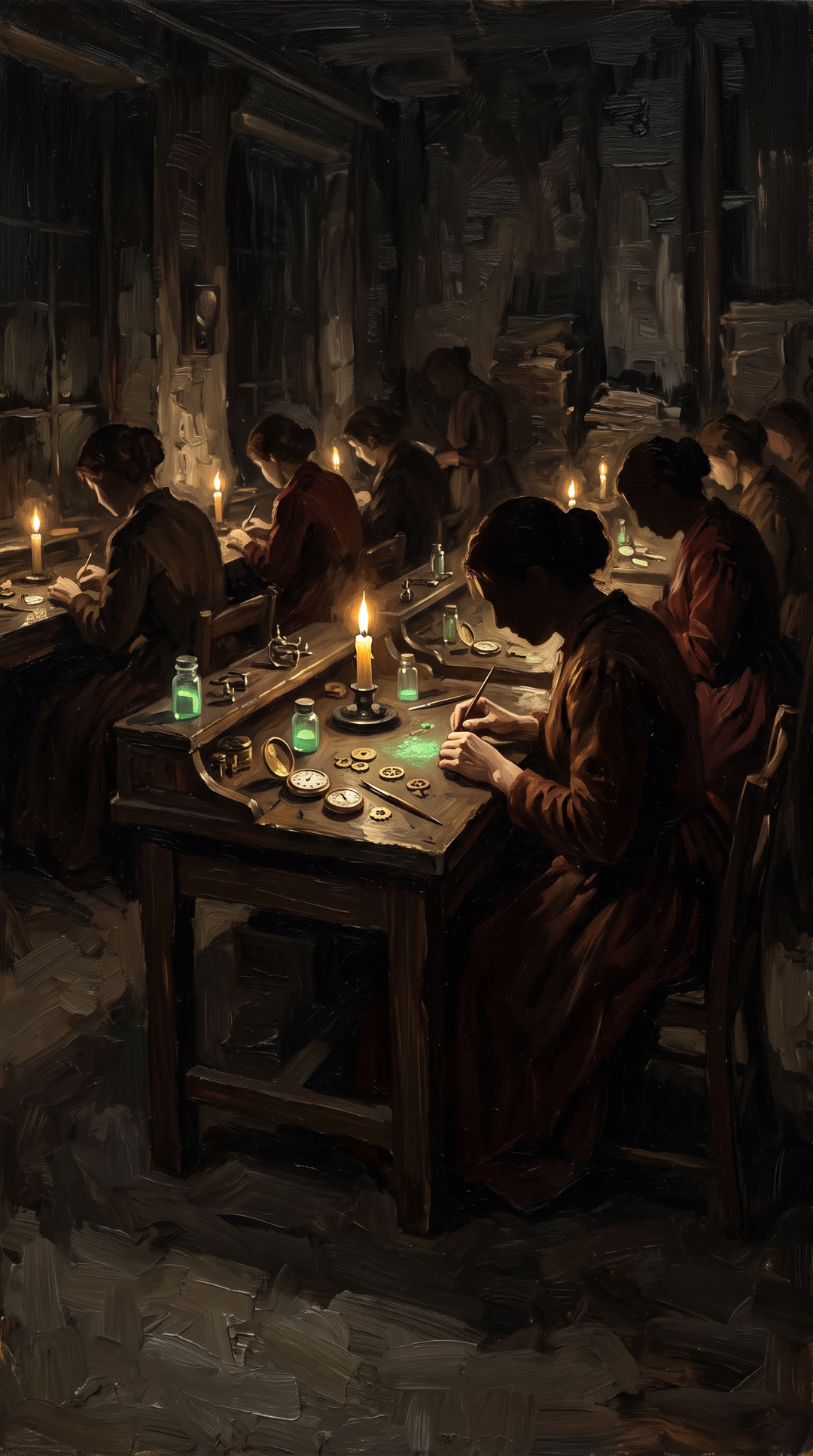
The town was Orange, New Jersey, and the year was around 1917 6. The employer was the United States Radium Corporation, usually shortened to USRC 3. The product was a self-luminous paint applied to watch dials and hands, and the workers hired to apply it were young women 6. The timing was no accident: as the First World War spread across the world, young American women flocked to factory work painting clocks, watches and military dials with a special luminous substance made from radium 7.
The paint itself was a simple recipe with a deadly ingredient. It was made from powdered radium, zinc sulfide (a phosphor), gum arabic and water 6. The women mixed their own paint from radium dust and other ingredients before sitting down to the fine detail work 3. By the standards of the day, it was a desirable position, remembered by the women as a fun job, lucrative and glamorous 7.
Orange was the first of three American factories where dial painters would contract radiation poisoning; the others were in Ottawa, Illinois, beginning in the early 1920s, and in Waterbury, Connecticut, also in the 1920s 6. Across these factories as many as 4,000 women worked, some of them as young as 14 4. None of them, and very few people anywhere, understood what they were handling: in the early twentieth century the public had not yet grasped radium's true dangers 1.
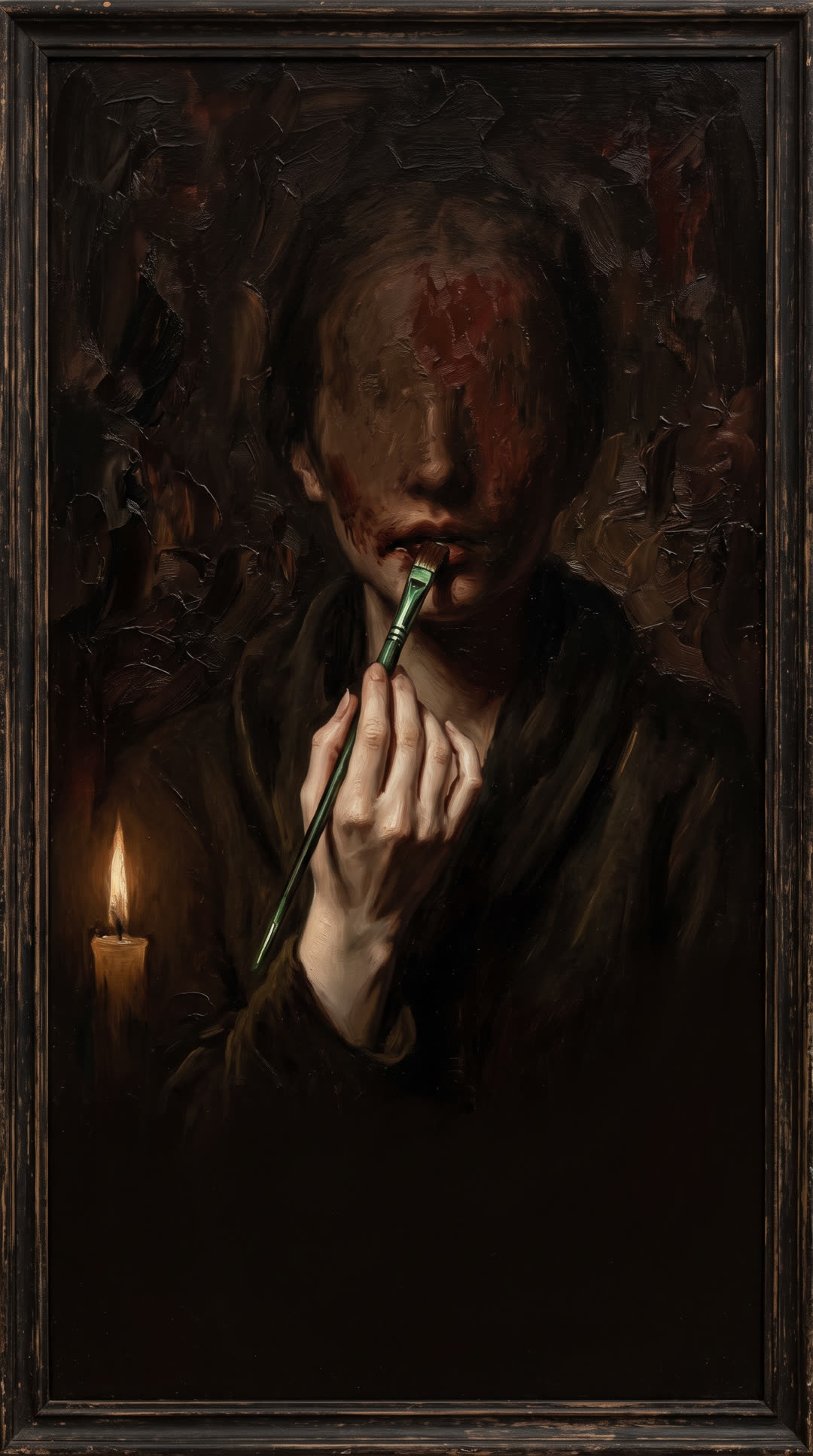
Painting the tiny numerals on a watch face required extremely sharply pointed brushes 3. The trouble was that the brushes lost their shape after only a few strokes 6. The solution adopted on the factory floor became infamous. USRC supervisors encouraged the workers to shape the point of the brush with their lips, a routine summed up as "lip, dip, paint," or to use their tongues to keep the bristles sharp 6. The women were told, in plain terms, to use their lips and tongue to shape the brush 3.
The reasoning was about efficiency. Using rags or a water rinse to re-point the brushes caused the painters to use more time and more material, and the paint was expensive to make 6. So the women pressed the brushes between their lips again and again, and in the process ingested small doses of the radioactive element with every point 1. They had to repeat the motion throughout the day to maintain the fine tip, which meant they were swallowing radioactive paint more or less constantly 3.
Crucially, no one warned them. The women were told the paint was harmless before they began ingesting what would prove to be deadly amounts of radium 6. Their employers at the radium company assured them there was nothing to fear 3. The true nature of the substance in their mouths had been kept from them entirely 6.
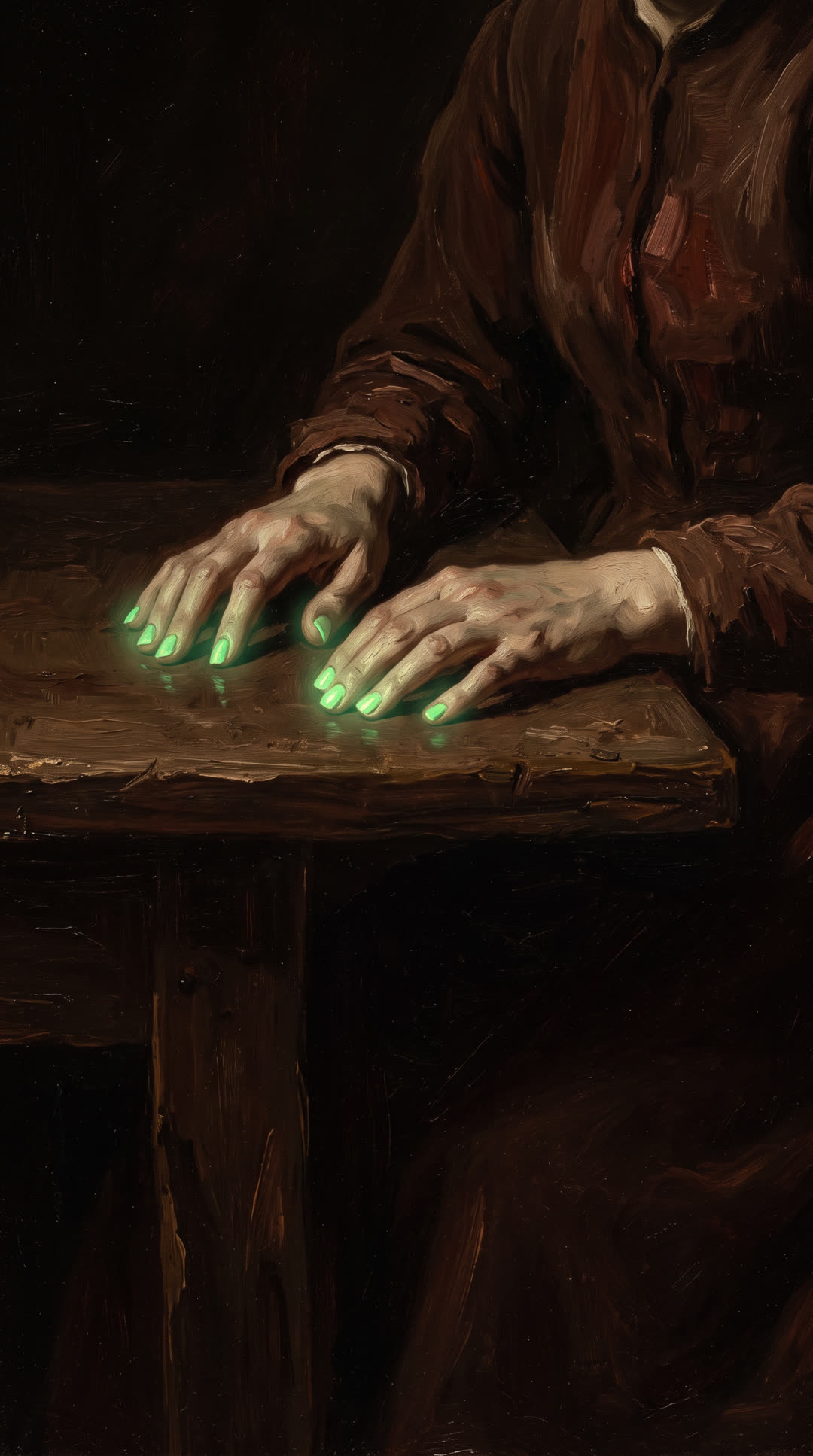
Because the real danger of radium had been concealed from them, the women treated the glowing paint as a novelty. They painted their nails, their teeth and even their faces for fun with the paint produced at the factory 6. Some used it on their teeth specifically to brighten their smiles 3. The effect extended beyond deliberate decoration: the radium dust that filled the workroom made their skin, hair and clothes glow, and they became known locally as "ghost girls" 3. Covered head to toe in dust from the paint, the girls shone brightly in the dark 7.
That detail matters for understanding how the poisoning happened. Lip-pointing delivered radium straight into their bodies, but the dust that coated the women from head to toe meant that exposure was not confined to what they swallowed 7. The luminous glow that made the job feel exciting was, in the framing of the most widely read popular history of the case, the very thing that was slowly killing them 7.
The first professionals to notice something wrong were dentists. They saw numerous problems among dial painters: dental pain, loose teeth, lesions and ulcers, and tooth extractions that simply failed to heal 6. The early complaints initially seemed minor 1. Then the symptoms escalated in ways that baffled physicians, including spontaneous limb fractures, anemia, jaw deterioration and the development of cancerous tumors 1.
Many of the women developed anemia and bone fractures, along with necrosis of the jaw, a condition now known as radium jaw 6. This extremely painful and disfiguring condition was the most common of the diseases the dial painters suffered; the radium caused the victims' jaws to disintegrate over time, eventually killing them 3. The women also experienced sterility and the suppression of menstruation 6.
The medical picture sharpened over the course of the decade. By the time the first dial painter died in 1923, the medical community had begun to suspect that radium exposure was the cause 3. When one of USRC's senior chemists died of aplastic anemia in 1925, the connection became obvious 3. Studies by officials in New Jersey proved that the women were suffering from radiation poisoning and that it had come from the radium they were exposed to at work 3. A mid-1920s study led by Newark pathologist Harrison Martland revealed high radioactivity levels in both living and dead dial painters, essentially diagnosing them with radium poisoning 1.
How many women died is harder to say. One account puts the figure at more than 50 by 1927 6, while another stresses that it is not really clear how many women died of radiation poisoning across the factories 4. What is certain is the human geography of the aftermath: several of the dial painters are buried in Orange's Rosedale Cemetery 6.
Grace Fryer decided to fight. Finding a lawyer willing to take on a powerful corporation proved difficult; it took her two years to find an attorney to take the case 38. Raymond Berry finally agreed to represent her, and four other women joined: Edna Hussman, Katherine Schaub, and sisters Quinta McDonald and Albina Larice 3. The five surviving workers jointly sued their former employer for damages 1. Newspaper headlines dubbed them the Living Dead and the Radium Girls 3. Their employers denied all responsibility 7.
Berry hired a 30-year-old physicist, Elizabeth Hughes, who used an electroscope to measure radioactivity in the breath of the five dial painters 3. Hughes testified that all five women had ingested so much radium that their breath was toxic, and her testimony gained worldwide attention 3. To avoid the bad publicity, the company agreed to settle out of court 3. USRC denied any wrongdoing, but the case was settled in the autumn of 1928, before the trial could be deliberated by a jury 5. Each woman received $10,000, equivalent to roughly $188,000 in 2025, plus a $600-a-year annuity paid at $12 per week for the rest of her life, with all medical and legal expenses covered by the company 5. The rest of their lives would not be long: all five women were dead by the 1930s 5.
It is worth being precise about what happened in New Jersey. The case was settled out of court rather than decided by a verdict 15. A formal ruling in the workers' favor came later and elsewhere: dial painters in Ottawa, Illinois, were able to appeal to the Illinois Industrial Commission, which ruled in their favor in 1938 4. Small groups of Radium Girls sued their employers in the 1920s and again in the 1930s, at a time when employee safety regulations did little to protect them against radiation-related injuries 1.
The consequences were nonetheless real. Lip-pointing was discontinued by the 1930s 1. After the litigation, dial painters were instructed in proper safety precautions and provided with protective gear; they no longer shaped brushes by lip and avoided ingesting or breathing the paint 6. The lawsuit and the publicity it generated were a factor in the establishment of occupational-disease labor law, and in 1949 Congress passed a bill providing compensation for all workers suffering from occupational diseases 56. It has been described as one of the first instances in the United States in which employers were held liable for the health and safety of their employees 3. The saga now occupies an important place in the history of health physics, women's rights and the labor rights movement 5, and the cases shaped scientific understanding of radiation 1. The paint itself outlived the women by decades: radium paint was still used in dials as late as the 1970s, and the last factory manufacturing it shut down in 1978 6.
What we know vs. legend
What we know vs. legend: 'They sued, and they won.' The New Jersey case ended in an out-of-court settlement in autumn 1928, before any jury deliberated, and USRC denied all wrongdoing 5; there was no verdict. A formal ruling for the workers came only in the Illinois case, when the Illinois Industrial Commission found in their favor in 1938 4. 'Won a settlement' is the accurate phrasing.
What we know vs. legend: the filing date. Some sources say the five women filed suit in 1927 18, while another states it was 1928 before the suit was finally filed 2. All agree the case settled in 1928 25.
What we know vs. legend: the death toll. Wikipedia states that more than 50 dial painters had died by 1927 6, but another account stresses that it is not really clear how many women died among the roughly 4,000 who worked in the factories 4. Any precise figure should be treated cautiously.
What we know vs. legend: 'They created OSHA.' One source credits the legacy with government oversight bodies like OSHA 3, but that agency dates from 1970; the connection is indirect. The documented outcomes are the end of lip-pointing by the 1930s 1, protective measures for later painters 6, and the 1949 congressional compensation law 5.
What we know vs. legend: 'changed workers' rights forever.' The substance is supported: the cases were a factor in occupational-disease law and led to the 1949 compensation bill 56, though Wikipedia flags part of its account of a 'provable suffering' standard with a citation-needed notice 5.
What we know vs. legend: lip-pointing as the sole cause. Ingestion through pointing brushes was primary 16, but the women were also covered head to toe in radium dust 7, so exposure came by other routes as well.
What we know vs. legend: vivid personal detail. Much of the intimate narrative of the women's lives draws on previously unpublished diaries, letters and interviews collected in Kate Moore's popular history 7; specific anecdotes from that tradition are not independently verified here.
Sources
- 1. How the Radium Girls Forced Workplace Safety Reforms | HISTORY — history.com
- 2. The Story of the Radium Girls | A Short Documentary | Fascinating Horror — youtube.com
- 3. The Radium Girls' Dark Story Still Glows With Death and Deceit | HowStuffWorks — history.howstuffworks.com
- 4. The Radium Girls and the Quest for Workplace Safety — youtube.com
- 5. Radium Girls — en.wikipedia.org
- 6. Radium Girls — en.wikipedia.org
- 7. The Radium Girls — simonandschuster.co.uk
- 8. The Radium Girls: How Glow-in-the-Dark Watch Painters Changed Worker Safety Forever - Lively History — livelyhistory.com
Images and narration are AI-generated; the story is researched from the sources above. How we work